INSIGHTS
The Chess Tournament That Explains AI
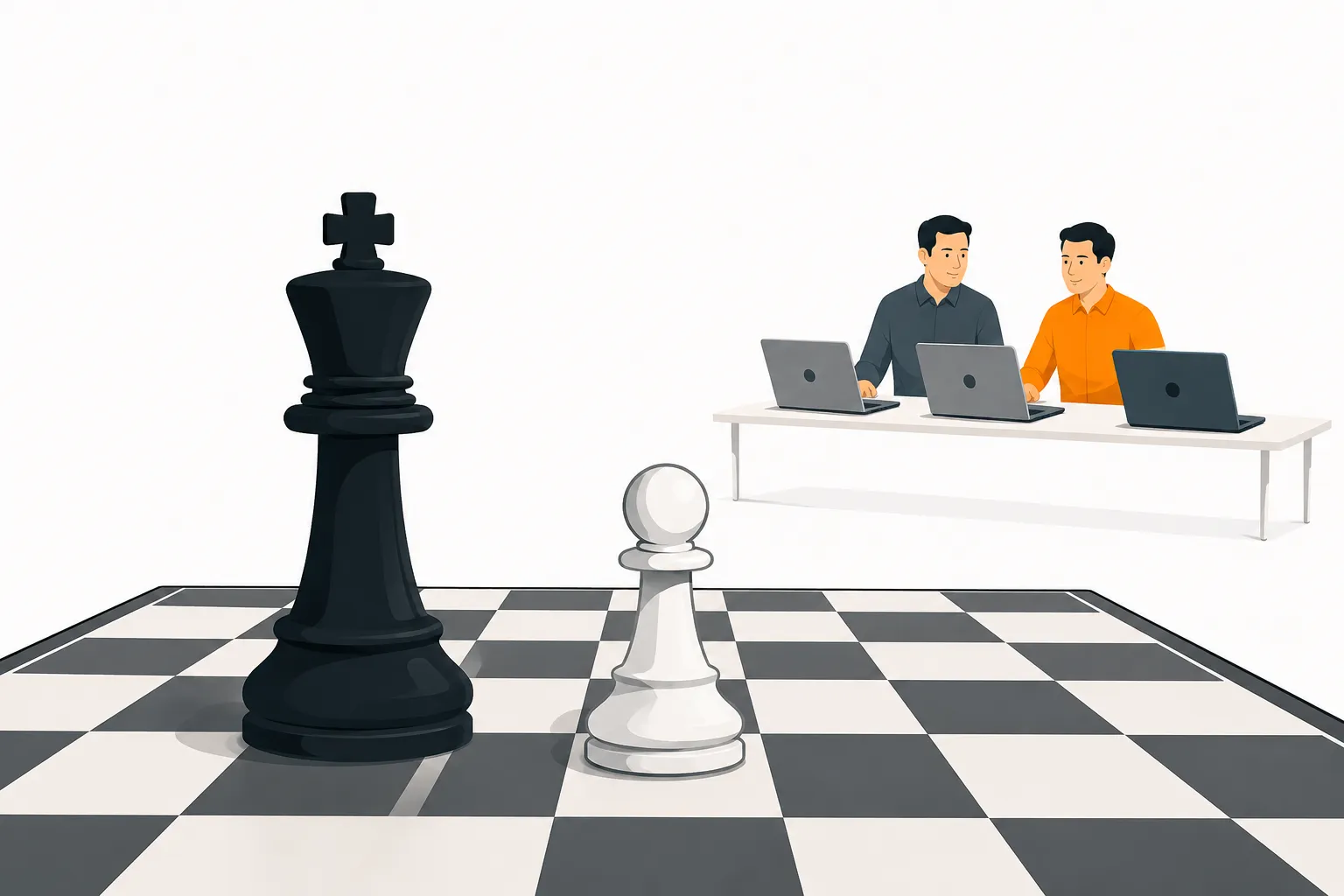
Back in 2005, an online chess tournament decided to throw out the usual rulebook.
It was called freestyle chess, and the rules were basically: anything goes. You could play alone, bring in a grandmaster, use chess software, run multiple computers or combine the whole lot. No one cared how you arrived at the move. Only the move mattered.
As you can imagine, the field was stacked. There were elite chess players working with powerful computers, teams with serious technical horsepower and even Hydra — one of the strongest chess supercomputers in the world at the time.
So, naturally, the tournament was won by two guys from New Hampshire with fairly ordinary chess ratings and three fairly ordinary computers.
Because of course it was.
Zackary Stephen and Steven Cramton were not grandmasters. They were not even close. On paper, they had neither the chess talent nor the computing power to beat the strongest teams in the competition.
But they had something the others did not: a better way of working.
They knew what they were good at, what the computers were good at and — just as importantly — where each could go wrong. They would narrow the position to a small number of promising moves, divide the analysis between them, run the options through different chess engines and then compare the results.
They did not blindly accept whatever the machine suggested. They questioned it, tested it and added their own judgment before deciding what to play.
Their technology was not the advantage. Their process was.
That process allowed two average club players with off-the-shelf technology to beat grandmasters using more powerful machines. They won the tournament and the $10,000 prize.
Garry Kasparov later captured the lesson perfectly: a weaker human working with a machine and a better process can outperform both a stronger machine on its own and a stronger human using a machine badly.
That may be one of the best lessons we have for the age of AI.
Most people are currently asking, “Which AI tool should I use?” That is understandable, but it is not the most important question.
The better questions are:
What am I trying to accomplish? What should I ask the technology to do? What still requires my judgment? How will I check the output? How does this fit into the way I actually work?
Access to powerful AI will become increasingly common. Capability will not.
The advantage will come from employees who understand what the technology does well, where it fails, when human judgment matters and how to build AI into a better way of working.
That is why AI readiness is ultimately a workforce capability issue.
Better AI matters. Better humans working with AI matter more.