
AI ROLEPLAY
Spar78 is AI-powered conversation practice for wholesale distribution. Your salespeople, managers and service teams rehearse the conversations that actually matter, the price increase, the credit hold, the performance discussion, the delivery that went wrong, with a counterpart who pushes back like the real one does. Then they get coached on how it went.
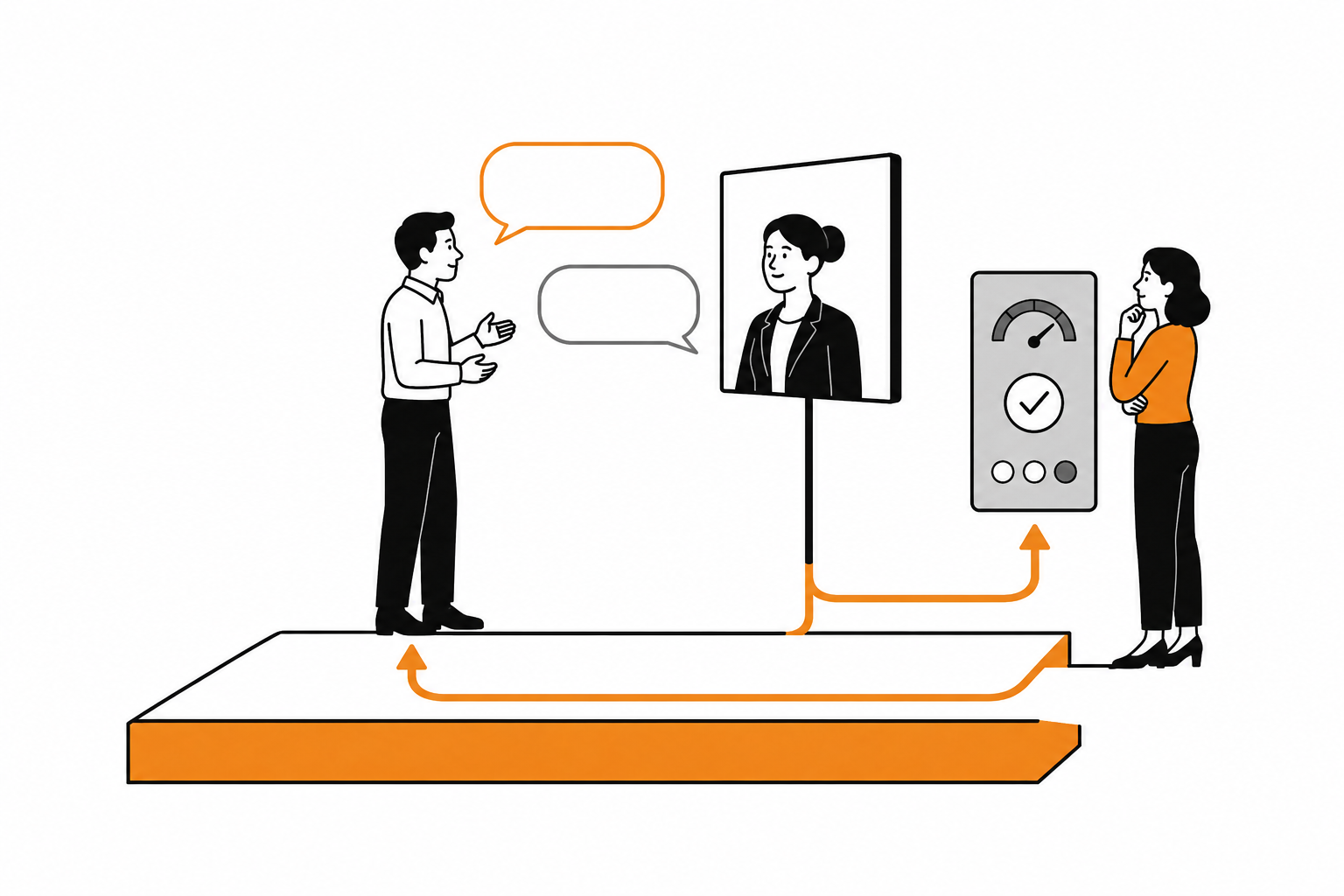
Think about where your revenue and your retention are actually won and lost.
A contractor calls at 6:45 am. The material is not on the truck, the crew is standing around, and it is not your fault. Your counter person has about four seconds to decide how this goes.
Your best inside salesperson has to tell a fifteen-year customer that pricing moved again. She knows the number is right. She discounts anyway, because that is easier than the conversation.
A customer wants to release an order that puts them over their credit limit. Your rep does not want to be the one who says no, so it goes to the branch manager, then to you.
A tenured employee will not use the new system. Everyone knows it. Nobody has had the conversation, because the last person who tried it got nowhere.
A service call went badly and the customer is on the phone. The next five minutes decide whether you keep the account.
Every one of these is a skill. Not a policy, not a product knowledge gap, a skill. And in most distributors the only place that skill gets developed is on live customers, at full cost, one attempt at a time.
Ask any sales manager whether practice makes a better negotiator, or any HR leader whether practice makes a better performance conversation, and you get the same answer you would get from any coach in any sport. Of course it does. You do not get better at a hard conversation by reading about hard conversations. So why does it almost never happen? Three reasons, and they are always the same three.
Nobody wants to fumble a price defense in front of the colleague they compete with for the top spot. So people play it safe, the exercise stays shallow, and everyone is relieved when it ends.
A useful roleplay needs someone who can stay in character, push back credibly, and then give honest feedback. That person is usually your best manager, and their calendar is already full.
Practice only works through repetition. A sales meeting exercise every six months is not repetition. It is a memory.
Take away the audience, the scheduling and the ceiling on repetitions, and the objections disappear. That is exactly what AI roleplay does.
There is no mystery to it, and it is not a quiz with a chatbot. Here is the whole thing.
01
A specific one, drawn from your business. Price increase with a loyal account. Shortage call. Coaching an employee who is not meeting expectations.
02
You speak, the counterpart answers. It is a real spoken conversation, not typing. The AI plays the other person, and that person behaves like the real one: skeptical, distracted, annoyed, loyal, whatever the situation calls for.
03
The counterpart pushes back, brings up the competitor's quote, mentions the last time you were late, goes quiet when you get defensive. If you dodge the hard part, they let you dodge it, and that shows up in your results.
04
Not a pass or fail. Specific feedback on what you did with the conversation: whether you led with the facts or led with your story about them, whether you made it safe enough for the other person to tell you the truth, whether you actually closed on anything.
05
This is the part traditional roleplay could never offer. Same scenario, different approach, ten minutes later. The learning happens in the second and third attempt, not the first.
Two short excerpts. The first is a Sales scenario, the second a Leadership scenario. Both are drawn from situations distributors deal with every week.
SALES: DEFENDING A PRICE INCREASE WITH A LONG-STANDING CUSTOMER
Counterpart
I just got the confirmation and it is up almost four percent from the last order. Same part, same quantity. What am I paying for here?
Learner
Yes, our costs went up across that line this quarter, so unfortunately the pricing had to move.
Counterpart
Everybody's costs went up. I have got a quote sitting in front of me that did not move. Are you telling me they are eating it and you are not?
Learner
I would have to look at what is in that quote. It might not be the same part.
Counterpart
It is the same part. Look, I have been buying from you for eleven years. I am not trying to squeeze you. I just want to know why it is me who is absorbing this.
This is the moment. The learner can defend the number, cave on the number, or find out what is actually bothering an eleven-year customer. Most people cave, and they never find out that the price was not really the problem. In practice, they can find out. Three times in a row if they need to.
LEADERSHIP: RAISING PERFORMANCE WITH A TENURED EMPLOYEE
Learner
Dave, I wanted to talk about the quoting turnaround. It has been slipping.
Counterpart
Slipping. Okay. Slipping compared to what?
Learner
Compared to where we need it to be. A few customers have mentioned it.
Counterpart
Which customers? Because I have been here nineteen years and I have never had a complaint about my quotes. I am also covering two territories since Marlene left, which nobody seems to have factored in.
Learner
I understand it has been busy.
Counterpart
It is not busy. It is two jobs. There is a difference. So is this a performance conversation or are we finally going to talk about the workload?
Most managers walk into this one with a vague concern and walk out having agreed to revisit it later. The employee is not wrong about the workload, and the quoting problem is still real. Handling both at once is a skill, and it is almost never practiced before the meeting that counts.
After the conversation, the learner gets a read on how they handled it. Not a score on a curve, and not a transcript with nothing to do with it. A short set of observations tied to what makes hard conversations work.
Did you make it safe? People tell you the truth when they are not defending themselves. Most conversations fail in the first thirty seconds, when the other person decides this is an argument.
Did you lead with facts, or with your story about them? "You are always late with the PO" is a story. "The last three POs came in after the cutoff" is a fact. One of them starts a conversation, the other ends it.
Did you find out what was actually going on? The stated objection is rarely the real one. Price is almost never really about price.
Did you hold your position without hardening it? Standing behind a number is not the same as fighting about it.
Did you close on something? A conversation that ends warm and vague is a conversation you get to have again next month.
Most conversation practice tools on the market are built for enterprise software sales teams. That is not your business, and the sales conversation is not the only one costing you money. Spar78 covers the three conversation families that run a distribution business.
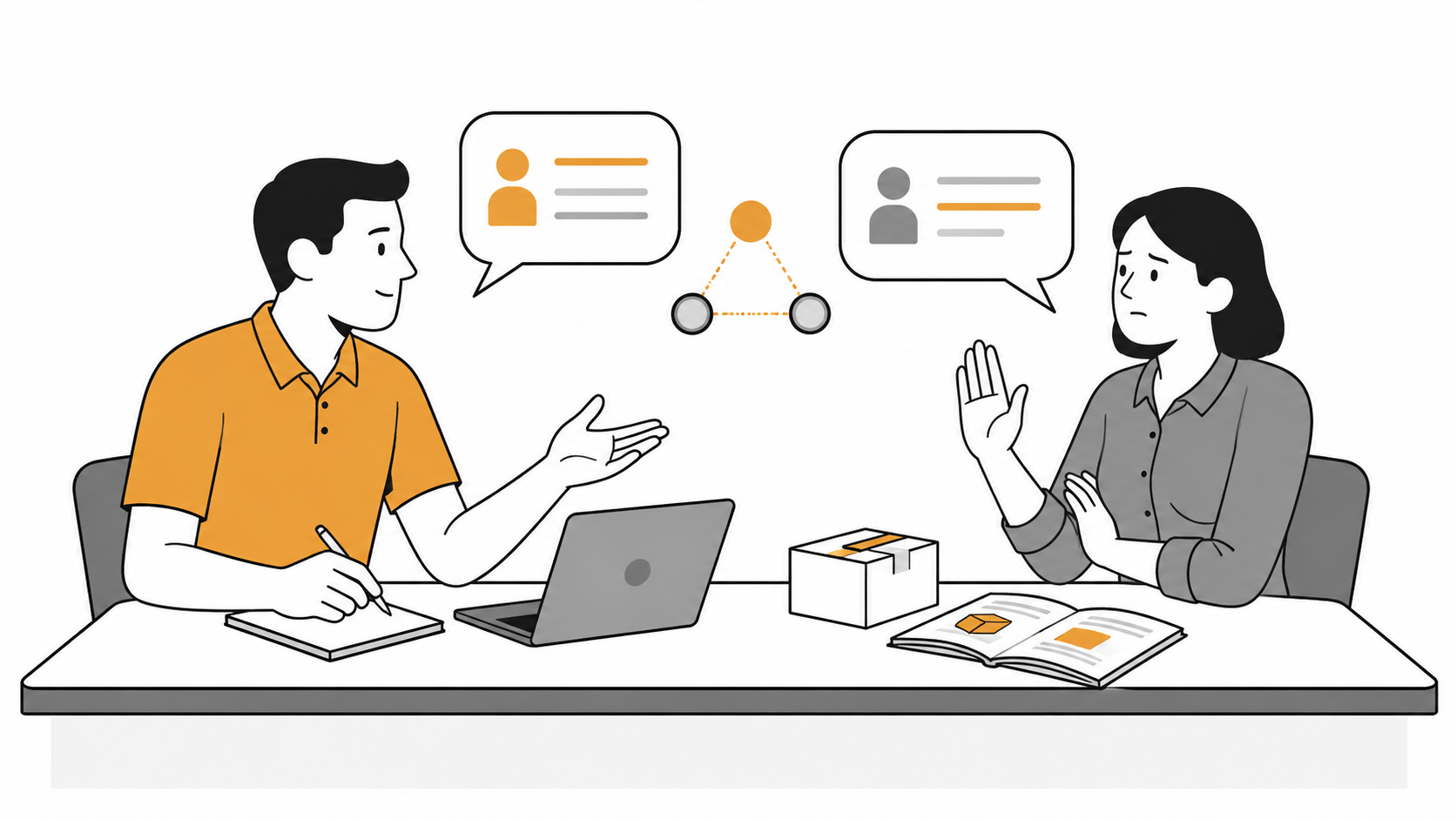
The customer-facing conversations where margin, share of wallet and loyalty are decided. Price increases. Competitive quotes. Winning back a lapsed account. Introducing a line the customer did not ask about. Saying no to terms you cannot give.
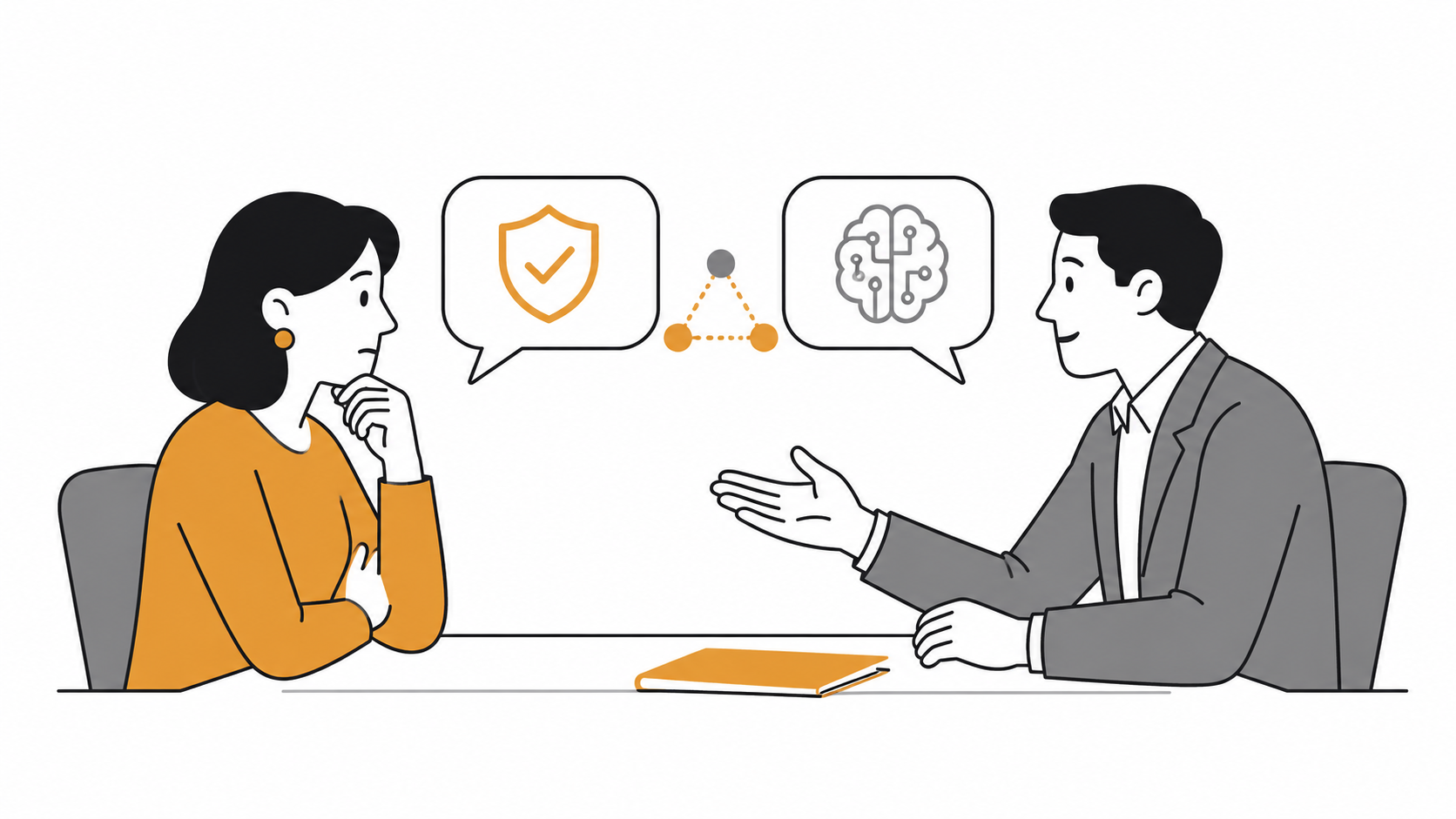
The internal conversations most managers avoid until they cannot. Performance that has slipped. Resistance to a new process. The tenured employee everyone works around. Giving feedback that changes behaviour instead of damaging a relationship.
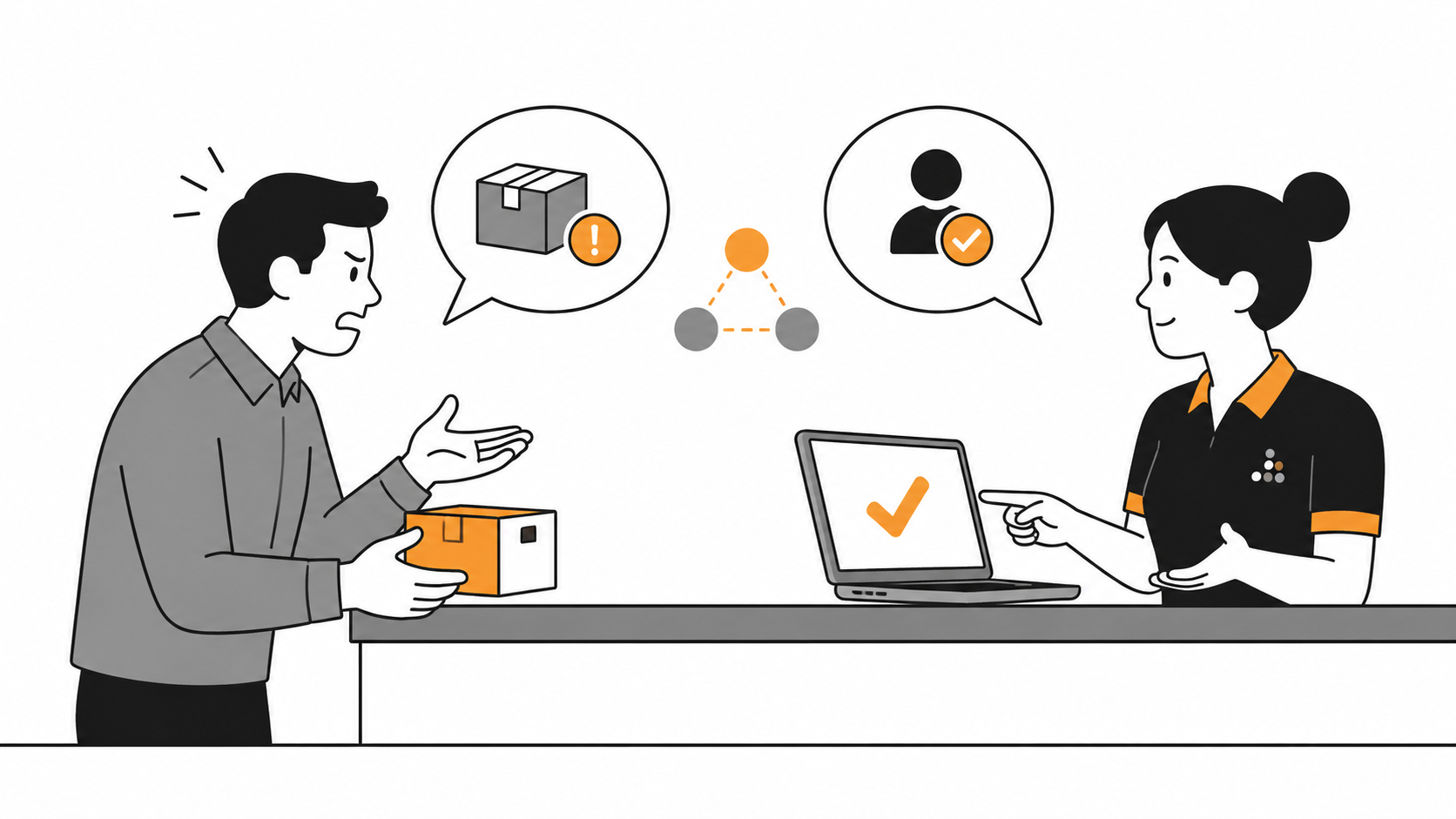
The moments a customer decides whether you are worth the trouble. The shortage call. The wrong material. The missed delivery window. The recovery conversation after something went badly wrong.
Same engine, same coaching model, three sides of your business.
A generic roleplay tool gives you a generic buyer with a generic objection, and your people can tell within two lines that it is not real. Once they can tell, the practice stops being practice.
Spar78 is built specifically for wholesale distribution. The scenarios are the ones your branches actually live: shortages, credit, competitive quotes, contractor timelines, tenured customer relationships, counter traffic, service recovery. The counterparts are drawn from the customer and employee types your people meet every week, not from a software sales playbook.
Where a client's business has its own products, customer types, vocabulary and rules, those flex. The structure underneath stays consistent, so a branch in one region is practicing the same skill to the same standard as a branch in another.
The reason people avoid roleplay is that it feels like an evaluation with an audience. If Spar78 felt like that, it would fail for the same reason.
Practice is a rehearsal, not a test. Mistakes are the product. A learner is meant to try the aggressive version, try the too-soft version, blow one completely, and find out what happens with nothing at stake. That only works if they know a bad attempt does not follow them around.
Two rules make that real. Scores exist for coaching and development. They are not used to decide promotion, discipline or termination. And the counterparts are archetypes built from a structured intake, never digital twins of named people: no CRM records, customer lists, contact details or recorded calls are used, and client data never trains shared models.
Your best branch manager will always be a better coach than any software. The problem was never the quality of your coaching, it was that there is one of them and twenty of your people, and the coaching happens after the conversation already went badly.
Spar78 changes what your managers are working with. Instead of debriefing a lost order weeks later from memory, they are working with people who have already run the situation five times and know exactly where they get stuck. Coaching stops being remedial and starts being about refinement.
The highest volume of customer conversations in the building, and usually the least formal training.
Where a single price or terms conversation carries a year of margin.
The people who inherit the problem someone else created.
The performance and change conversations that decide whether anything you roll out actually sticks.
The conversations that consume the most time and create the most risk: performance, conduct, accommodation, exits. Practiced in advance instead of scripted in a panic.
Reps before the first live call, and managers before the first difficult team conversation, instead of learning on your customers and your people.
Move78 builds capability two ways. Learning platforms raise what your people know: AI Workforce Readiness for AI competency measured against the 7 Levels, and Academy78 for the digital foundations underneath it. Practice platforms turn that knowledge into behaviour under pressure.
Spar78 is the practice half, and it stands on its own. You do not need an assessment or a readiness program first to put your counter team in front of realistic practice.
If you are already working with us on readiness, Spar78 is where capability becomes behaviour. If you are not, it is a perfectly good place to start, because the conversations are already happening whether or not anyone is ready for them.
Spar78 is delivered as a program, not a licence you are left to work out on your own. We build the scenario library with you, because a scenario that does not sound like your business is not practice, it is theatre. Your products, your customer types, your vocabulary, your rules.
Tell us which roles and which situations hurt most, and we will scope the practice around them.
Practice is the cheapest place to get it wrong.